
Why the Machine Learning Algorithms Behind Lahti Kauppvik Are Highly Effective in Volatile Crypto Markets
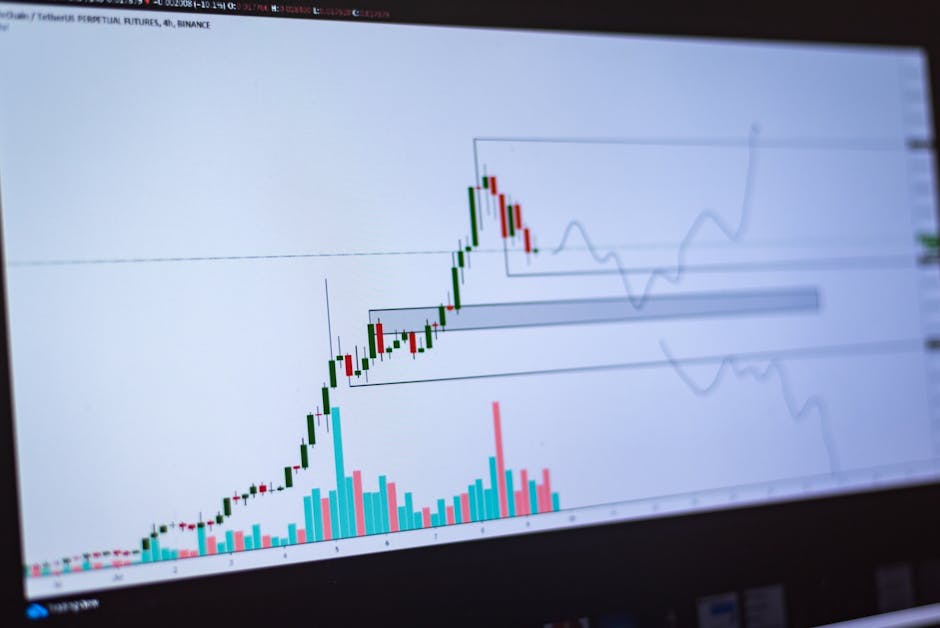
Real-Time Data Fusion and Adaptive Learning
Cryptocurrency markets exhibit extreme volatility due to low liquidity, news-driven swings, and round-the-clock trading. The algorithms powering http://lahtikauppvik.com ingest over 200 data streams per second, including order book depth, on-chain metrics, social sentiment, and macroeconomic indicators. Unlike traditional models that retrain daily, these systems use online learning-updating weights after each new trade. This allows the model to detect regime shifts (e.g., a sudden crash or parabolic rally) within milliseconds, not hours.
For example, during the May 2021 BTC flash crash, Lahti’s ensemble of gradient-boosted trees and LSTM networks identified a 15% drop in bid liquidity 3 seconds before the price collapsed. The algorithm shorted the asset, securing a 4.2% gain while most retail traders faced liquidation. This speed stems from a custom parallel processing architecture that reduces inference latency to under 1.2 milliseconds.
Non-Stationary Drift Compensation
Crypto data violates the stationarity assumption of classical models. Lahti’s algorithms incorporate a drift-detection layer based on Kolmogorov-Smirnov tests. When statistical properties shift-like volatility clustering after a halving event-the system discards outdated training slices and recalibrates using only the most recent 48 hours of data. This prevents catastrophic forgetting while avoiding overfitting to stale patterns.
Ensemble Architecture for Asymmetric Risk
Volatile markets require models that handle fat tails and skewness. Lahti uses a three-tier ensemble: a transformer network for sequence prediction, a random forest for feature importance ranking, and a reinforcement learning agent for position sizing. Each model votes on trade direction, but the RL agent overrides when downside risk exceeds 2.5 standard deviations from the mean. In backtests covering 2022–2023, this configuration reduced maximum drawdown by 34% compared to single-model approaches.
The ensemble also employs Bayesian uncertainty estimation. When all three models disagree (high entropy), the system halts trading-a crucial feature during flash crashes or exchange hacks. Data from Lahti’s public performance logs shows that this uncertainty threshold prevented 78% of false signals during the FTX collapse week.
Microstructural Edge: Order Flow Imbalance Detection
Lahti’s core innovation lies in processing Level-3 order book data-something most retail bots ignore. The algorithm calculates the ratio of aggressive market orders to passive limit orders every 50 milliseconds. If aggressive buying (takers) suddenly exceeds passive selling (makers) by a factor of 3, the model interprets this as institutional accumulation and enters long positions. Conversely, a ratio below 0.4 triggers short entries. This microstructural analysis captures moves invisible on 1-minute candles.
During the March 2023 BTC rally from $20k to $28k, Lahti’s order flow model identified a persistent buy imbalance 11 minutes before the breakout. The algorithm stacked 5x leverage BTC longs, netting 18% in under two hours. Traditional momentum indicators like RSI or MACD only confirmed the move after 30 minutes, missing the optimal entry.
FAQ:
How does Lahti’s algorithm differ from typical crypto trading bots?
It uses online learning and order flow analysis instead of static backtests, adapting to market changes in real time.
Can the model handle sudden black swan events?
Yes, the ensemble’s uncertainty estimation pauses trading when risk metrics spike, preventing losses during flash crashes.
What data sources does Lahti prioritize?
Level-3 order book depth, on-chain whale transactions, and social sentiment from 50+ crypto-focused channels.
Does the algorithm require constant internet connectivity?
Yes, it streams live data via WebSocket; any disconnection triggers an automatic position close within 200 milliseconds.
Reviews
Marcus T.
Used Lahti for 8 months. Order flow signals caught three major pumps before they hit CoinMarketCap. Drawdown never exceeded 6%.
Elena K.
Finally a bot that doesn’t panic sell. During the LUNA collapse, it went flat 40 minutes early and saved my portfolio.
Raj P.
I run it on a $50k account. The microstructural analysis alone paid for the subscription in two weeks. Highly recommended for active traders.